
headlines
How A Reversal On NJ Sports Betting Case Could Affect Nevada Sportsbook Industry

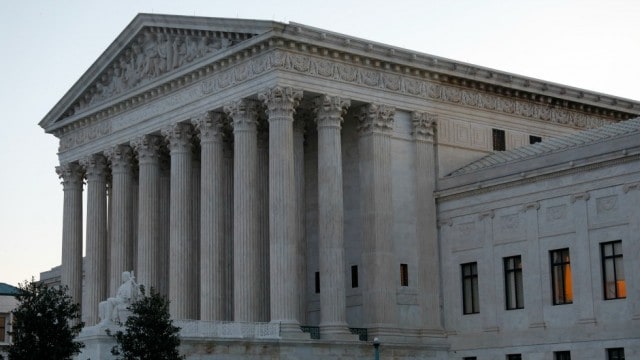
To the surprise of online gambling operators and prominent legal experts in the field, the U.S. Supreme Court announced that it will review the court ruling that blocks New Jersey based sports gambling. It was the 3rd U.S. Circuit Court of Appeals that ruled against the law initially because they considered it to be in direct contention with the federal law that prohibits state based sports wagering in all but 4 states, The Professional and Amateur Sports Protection Act of 1992 (PASPA).
PASPA has long been considered unconstitutional by legal proponents of the online gambling community and the American Gaming Association which has most of Las Vegas’ major gambling money makers as members. If a law in New Jersey that was ruled in direct opposition of PASPA is reinstated, this likely means it might also lead to national repeal of PASPA and open the option for legal sports betting across all states.
Some might be brought to question if this is even a good thing for Nevada. If all the states are opened up to legalized sports betting at the state level, it certainly means that some of that business might go elsewhere. Industry leaders in Nevada argue the exact opposite.
They posit that if and when the national prohibition on sports betting ends, it would have more of a detrimental effect on the legal offshore gambling websites currently providing sports betting services to US residents than in the four states that are legally allowed to have them currently. They remain confident that Nevada will maintain their status as the top dog in the American sports wagering world.
The infrastructure in Nevada for sports betting is already established and would be able to adapt to a national level much faster than brands just starting out in the industry. Companies like William Hill and MGM who have already embraced online sports wagering, live betting, and mobile optimization of sports gambling are already primed and ready to create a national sports betting brand. People will undoubtedly still flock to Las Vegas for the complete experience at the highest rated sports gambling establishments in the country.
However, the Supreme Court’s review of the New Jersey law that could lead to the repeal of PASPA might go exactly the opposite way. According to one theory by legal experts, Ryan Rodenberg and John Holden, one possible scenario of the review might lead to what’s known in the legal community as “equal sovereignty”. The “equal sovereignty doctrine” that has been used in the US courts before means that the federal government must treat all the states equally.
If the review concludes with the legal opinion that PASPA is constitutional and it does not get repealed, there is a case to be made for equal sovereignty. This means that those states that are currently allowed to regulate sports wagering legally would no longer be exempt from the law that gives them those rights because other states won’t have them either.
To further muddy the waters, the pending GAME Act and/or RAWA would all have a national impact on sports wagering within the US. Regardless of which direction all of this goes, legally licensed offshore gambling sites accepting US players will still be available to offer the same services to American bettors that they’ve been providing thus far.

NFL Week 2 arrives with the usual rush of fresh storylines, but the NFL betting board is already telling its own story. Week 1 results have pushed several lines sharply in one direction, creating plenty of conversation before the first Thursday night kickoff.
The Detroit Lions visit the Buffalo Bills to open the week, with Buffalo listed as a 3.5-point favorite and the total at 53.5. That total is the highest on the board, a clear sign that oddsmakers expect an aggressive game rather than a cautious one. The number has also moved upward from its 52.5 opening point, reflecting early confidence in points.
Elsewhere, Week 1 has clearly affected perception. Chicago moved from a 3.5-point favorite to -5 against Minnesota, while Tampa Bay climbed from -5.5 to -8 against Cleveland. Philadelphia also rose from -4.5 to -7 against Tennessee. Those changes do not guarantee results, but they show where the market has become more convinced.
For casual fans, that is the real value of the Week 2 odds board: it captures the league’s fast-moving mood after one weekend. It is not a prediction machine. Injuries, matchup changes, weather, and late news can move a number quickly, so treat any line as a snapshot, not a promise.
Week 2 NFL Odds
When betting on the NFL regular season, you are several options for US players, including domestic and offshore sportsbooks, in-person sports wagering services (depending on your state), and sportsbook apps.
While we prefer offshore services for their favorable odds and bigger welcome bonuses, you can also find several betting options (moneyline, totals, futures, props, + more) at your local betting facility.
Below are the current Week 2 NFL game line odds from Bovada’s online sportsbook.
Week 2 Game Lines via Bovada
Lions vs. Bills
- Money line: Lions +190, Bills -230
- Spread: Lions +5.5, Bills -5.5
- Totals: O 54.5, U 54.5
Panthers vs. Falcons
- Money line: Panthers -145, Falcons +125
- Spread: Panthers -2.5, Falcons +2.5
- Totals: O 44, U 44
Bengals vs. Texans
- Money line: Bengals +125, Texans -145
- Spread: Bengals +2.5, Texans -2.5
- Totals: O 46.5, U 46.5
Browns vs. Buccaneers
- Money line: Browns +315, Buccaneers -420
- Spread: Browns +8, Buccaneers -8
- Totals: O 41.5, U 41.5
Packers vs. Jets
- Money line: Packers -175, Jets +150
- Spread: Packers -3, Jets +3
- Totals: O 44.5, U 44.5
Vikings vs. Bears
- Money line: Vikings +195, Bears -235
- Spread: Vikings +5, Bears -5
- Totals: O 48, U 48
Saints vs. Ravens
- Money line: Saints +310, Ravens -415
- Spread: Saints +7.5, Ravens -7.5
- Totals: O 47, U 47
Eagles vs. Titans
- Money line: Eagles -340, Titans +270
- Spread: Eagles -7, Titans +7
- Totals: O 40, U 40
Steelers vs. Patriots
- Money line: Steelers +200, Patriots -240
- Spread: Steelers +5, Patriots -5
- Totals: O 41.5, U 41.5
Jaguars vs. Broncos
- Money line: Jaguars +125, Broncos -145
- Spread: Jaguars +2.5, Broncos -2.5
- Totals: O 45.5, U 45.5
Raiders vs. Chargers
- Money line: Raiders +240, Chargers -290
- Spread: Raiders +6.5, Chargers -6.5
- Totals: O 43.5, U 43.5
Dolphins vs. 49ers
- Money line: Dolphins +650, 49ers -1100
- Spread: Dolphins +13, 49ers -13
- Totals: O 45.5, U 45.5
Seahawks vs. Cardinals
- Money line: Seahawks -195, Cardinals +165
- Spread: Seahawks -3.5, Cardinals +3.5
- Totals: O 41, U 41
Commanders vs. Cowboys
- Money line: Commanders +180, Cowboys -220
- Spread: Commanders +4.5, Cowboys -4.5
- Totals: O 50, U 50
Colts vs. Chiefs
- Money line: Colts +235, Chiefs -285
- Spread: Colts +6.5, Chiefs -6.5
- Totals: O 46.5, U 46.5
Giants vs. Rams
- Money line: Giants +265, Rams -330
- Spread: Giants +7, Rams -7
- Totals: O 48, U 48
Offshore Football Betting
The sites found at OffshoreBettingSites.net have become increasingly popular in the US for their accessibility, crypto inclusion, and expanded wagering options.
Week 2 offers plenty of betting options, from the high total in Bills-Lions to market movement around Bears-Vikings and Seahawks-Cardinals. The safest way to enjoy the action is to focus on the football, treat odds as information rather than certainty, and place any wager only through a lawful, regulated option. The season is still young, and a few injuries could completely derail a team’s chances for a deep season run.
Sources:

One spin was enough to turn a visit to Mohegan Sun into a seven-figure payday for a New York casino player.
The unnamed guest won $1,557,777 while playing Aristocrat Gaming’s Dragon Link at Mohegan Sun’s Casino of the Sky in Uncasville, Connecticut. The result ranks among the biggest jackpots in the resort’s history and is its largest single-spin slot payout since March 10, when another player collected $1,770,327 on IGT’s Whitney Houston Slots.
The timing is noteworthy, too. Mohegan Sun had recently expanded its slot selection with another Aristocrat title, Thunder Empire, which arrived on June 30. The Dragon Link winner hit the jackpot while playing near the casino’s Hold & Spin Slot Zone.
Huge wins like this naturally grab attention because they combine two things casino players understand immediately: an enormous dollar figure and the possibility that a routine gambling session can suddenly become anything but routine.
They also highlight the increasingly broad ways Americans encounter casino games. Players may visit destination resorts such as Mohegan Sun, use state-regulated online casinos where those platforms are authorized, or encounter offshore gambling websites operating outside the U.S. state licensing framework.
Online Slot Jackpots
Progressive and high-value slot jackpots have long been among the biggest attractions on casino floors, and offshore slots have brought similar mechanics to phones and computers.
The basic appeal isn’t complicated. Some games offer fixed top prizes, while progressive slots feature jackpots that can increase as qualifying bets are made. Depending on the game, a progressive prize can be tied to one machine, a group of machines, or a wider network.
There is no reliable method for predicting the next jackpot. Progressive slot outcomes use random-number systems, and a large advertised prize doesn’t mean a particular player is more likely to win it.
The Mohegan Sun result provides a useful real-world example of just how large an individual slot payout can become. At $1.557 million, the Dragon Link prize wasn’t merely another five-figure casino win; it joined a relatively short list of exceptionally large payouts at the Connecticut resort.
It also comes during an active stretch for New England casino jackpot news. Recent reports have included a $26,770.04 slot jackpot from a $5 wager at Encore Boston Harbor, while a Quincy player reportedly turned a $7.50 baccarat side bet into more than $1.62 million at the same property.
That run of wins helps explain why jackpot stories travel well beyond the casino floor. Players aren’t only interested in who won. They want to know what game produced the payout, how large it was, and where similar jackpot-style games can be played.
Online Casino Options In The USA
For players considering a move from physical slot machines to online casino games, where they are located matters just as much as where they choose to play
The U.S. does not have a single nationwide framework governing real-money online casinos. Regulation is handled largely at the state level, meaning legal, state-authorized iGaming remains available in only a limited number of jurisdictions. Players should therefore check the laws and regulations that apply in their location before wagering online.
Offshore casino sites add another dimension. Some operators accept customers from parts of the United States while operating under licenses or registrations issued outside the country. That makes careful evaluation particularly important, as regulatory standards, consumer protections and dispute-resolution options can differ substantially between operators and jurisdictions.
Our OffshoreBettingSites.net most trusted guide compares operators using factors such as licensing, payout speeds, bonuses and available betting markets, helping readers assess more than the headline promotional offer.
The $1.557 million Mohegan Sun jackpot ultimately illustrates one of the qualities that has made slots so enduringly popular: a potentially life-changing prize can arrive unexpectedly. Online jackpot slots seek to recreate some of that excitement, but deciding **where to play deserves considerably more consideration than deciding which reels to spin**.
Whether gambling at a land-based casino, through a state-regulated online operator or on an offshore platform, the advertised jackpot is only one part of the equation. **Licensing, payout terms, player protections and applicable local gambling laws should come first.
Sources:
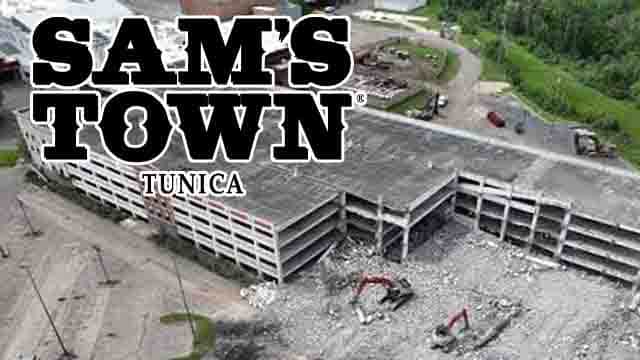
For nearly three decades, Sam’s Town Casino stood as one of the most recognizable landmarks in Tunica, Mississippi. This week, that chapter officially came to an end as demolition crews brought down the longtime casino, erasing another reminder of what was once one of America’s busiest gambling destinations.
Action News 5 documented the demolition, showing heavy equipment tearing through the property that first welcomed guests in 1994. While the building itself had already ceased operations, seeing it reduced to rubble carries symbolic weight for both longtime visitors and the local community.
Tunica’s rise during the 1990s was remarkable. At its peak, the area rivaled many of the country’s largest gaming markets, attracting millions of visitors from Tennessee, Arkansas, Missouri, and surrounding states. Casinos generated thousands of jobs while hotels, restaurants, and entertainment venues flourished alongside the gaming industry.
That landscape has steadily changed over the past two decades. As neighboring states introduced commercial casinos, tribal gaming, sports betting, and additional gambling options, Tunica gradually lost much of its regional monopoly. Today, only five casinos remain where more than ten once operated, illustrating how competitive the American casino industry has become.
The demolition of Sam’s Town is therefore more than the removal of an aging building. It reflects the broader evolution of online and offshore casino gaming across the United States, where regional markets continue adjusting to new competition and changing consumer habits.
Offshore Casino Options
 While land-based casino markets continue evolving, online gambling has become increasingly popular among American players looking for more gaming options than those available locally.
Only a handful of states—including New Jersey, Pennsylvania, Michigan, Connecticut, Delaware, Rhode Island, and West Virginia—currently regulate real-money online casinos. Residents elsewhere often have no access to licensed domestic online slots or table games despite having nearby retail casinos.
As a result, many U.S. players choose the most trusted offshore casino sites that have accepted American customers for years. These international operators typically offer:
- Thousands of online slot machines
- Blackjack, roulette, baccarat, and craps
- Live dealer casino games
- Video poker
- Progressive jackpots
- Cryptocurrency banking
- Mobile-friendly platforms
Well-established names such as those featured in our OffshoreBettingSites.net reviews continue serving many U.S. players by offering broad game libraries alongside integrated sportsbooks and poker rooms.
That doesn’t necessarily replace the experience of walking through a casino resort. Large casino properties still provide restaurants, concerts, hotel accommodations, nightlife, and social gaming experiences that cannot be replicated online. However, online gaming has undoubtedly expanded consumer choice, particularly for players who live hundreds of miles from a commercial casino.
The growth of offshore gaming also reflects changing entertainment preferences. Many players now value convenience, mobile accessibility, and around-the-clock gaming as much as traditional casino travel.
More Casino Closures Around the USA
Sam’s Town is far from the only casino property to disappear in recent years.
Tunica itself has experienced multiple closures over the past decade, including Resorts Casino Tunica, Tunica Roadhouse, Harrah’s Tunica, and several smaller properties that once helped establish the region as a gaming powerhouse.
Elsewhere, operators have also been consolidating operations.
In Washington, Maverick Gaming recently announced additional casino and cardroom closures as part of its ongoing Chapter 11 restructuring, eliminating more than 100 jobs across the state. The company cited financial pressures and restructuring efforts as it reduced its physical footprint.
Several older regional casinos around the country have likewise faced redevelopment, ownership changes, or permanent closure as operators focus investment on larger destination resorts and higher-performing markets.
Meanwhile, many newer casinos are opening in states that previously offered little or no commercial gaming. Arkansas, Virginia, Nebraska, and other jurisdictions have expanded casino gambling over the past several years, redistributing customers who once traveled long distances to established destinations like Tunica.
Sam’s Town helped define an era when Tunica was considered one of America’s premier gaming destinations. Its demolition closes the book on that history, but it also highlights how quickly the gaming landscape can change. For longtime visitors, the familiar western-themed casino may now be gone, yet its role in Mississippi’s gaming boom remains an important part of American casino history.
Sources:


NFL Week 2 Odds and the Truth About Offshore Betting
NFL Week 2 arrives with the usual rush of fresh storylines, but the NFL betting board is already telling its...


$1.5M Mohegan Sun Slot Win Puts Jackpots in Focus
One spin was enough to turn a visit to Mohegan Sun into a seven-figure payday for a New York casino...


Sam’s Town Demolition Marks End of Tunica Casino Era
For nearly three decades, Sam’s Town Casino stood as one of the most recognizable landmarks in Tunica, Mississippi. This week,...


Texas World Cup Fever Drives Betting Interest Despite Statewide Ban
The 2026 FIFA World Cup has transformed Texas into one of the busiest soccer destinations in North America. With matches...

Hollywood Casino Aurora Opens New Era for Illinois Gaming
After years of planning, construction, and anticipation, a new chapter has officially begun in Aurora, Illinois. On Wednesday, the long-awaited...
-
 headlines7 years ago
Bitcoin Means Smooth Sailing For Offshore Sports Betting Sites
-
 headlines9 years ago
US Sports Betting Market Looking At Expansion
-
 headlines7 years ago
‘Game of Thrones’ bettors win big at offshore betting sites
-
 headlines7 years ago
How To Know If An Offshore Gambling Site Can Be Trusted
-
 headlines8 years ago
Why Offshore Betting Sites Will Not Be Affected By New USA Gambling Laws
-

 headlines7 years ago
Offshore is Still the Only Political Betting Option for USA Residents
-

 headlines6 years ago
May Madness: Offshore Betting Giant Bovada Debuts NFL Sim Classic Tournament
-
 headlines6 years ago
Offshore Gambling Sites Side-Step Legal Challenges Between States and Native American Tribes